Islamic studies
- Hifz (Qur’an memorisation)
- Quranic Arabic
- Hadith
- Aqaaid
- Fiqh
Blended Madrasa Education
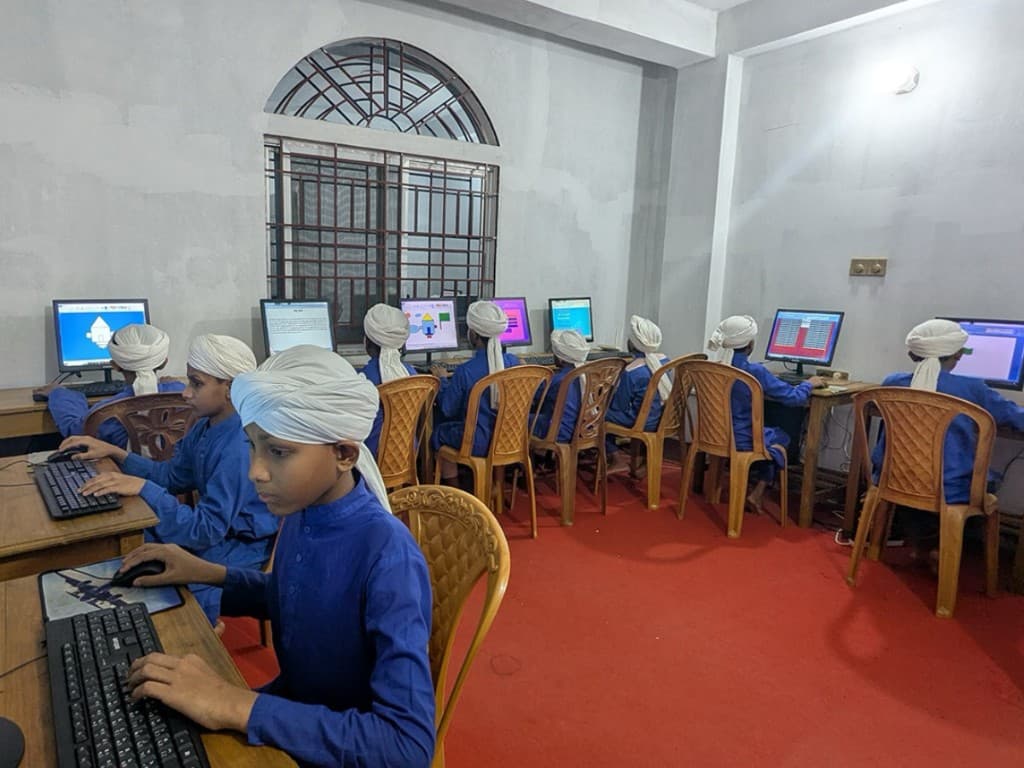
Peace Builder’s Blended Madrasa Education (BME) initiative combines Islamic studies with English, mathematics, science, and ICT to prepare students for both religious and professional futures.
13
Students at programme start
50
Planned cohort capacity
1:10
1 teacher per 10 students
£1,500
Approximate monthly running cost
Qur'an in their hearts. Skills in their hands.
Bangladesh programme
Providing blended Islamic and academic education for vulnerable children in rural Bangladesh.
1166372
UK Registered Charity No.
5 Years
Operating Successfully
100
Children Currently Enrolled
£100,000
Invested In School Construction
1:8
Teacher To Student Ratio
Rural Bangladesh
Programme Location
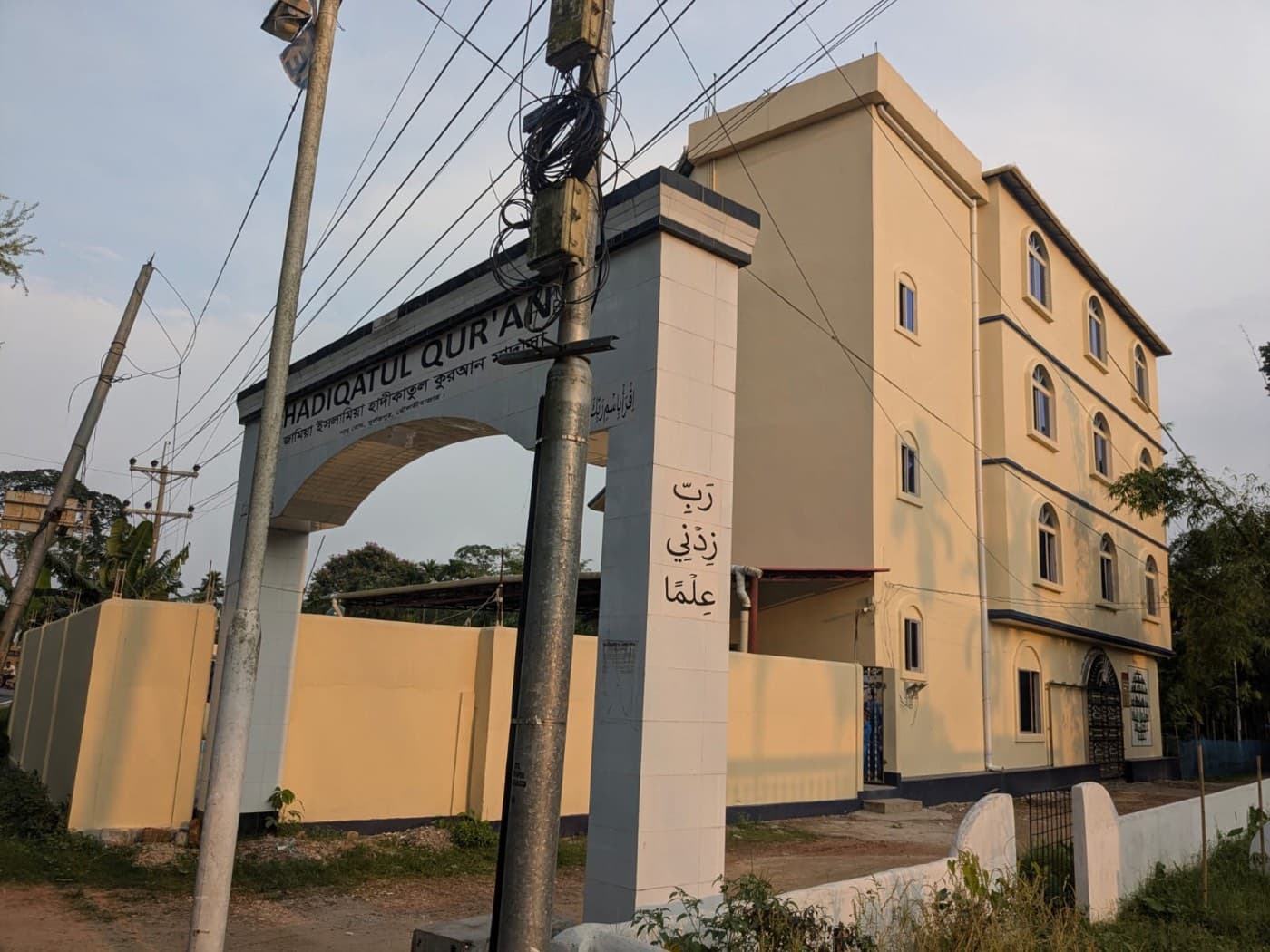
Jamia Islamia Hadiqatul Quran is a purpose-built educational project serving vulnerable children in rural Bangladesh. Through Blended Madrasa Education (BME), students combine Qur'an memorisation and Islamic studies with English, Mathematics, Science and ICT. The project has now been operating successfully for five years and continues to expand its educational provision.
See the programme
Hear from partners and classrooms where blended madrasa education is helping students build confidence, literacy, and hope for the years ahead.
Footage from Peace Builder’s Bangladesh programme area. Updated edits and subtitles may follow as materials are finalised.
The challenge
Across Sylhet division, many children first encounter formal learning in a madrasa or small community classroom. These settings carry moral authority for families and often provide the most realistic path to daily attendance.
At Jamia Islamia Hadiqatul Quran, one hundred children are now enrolled in a programme that has been delivered successfully for five years. Poverty, educational inequality, and limited routes into broader employment still shape what is possible. Hunger, seasonal work, long journeys, and the hidden cost of materials quietly interrupt learning. Young people who could contribute to their communities and to wider society are too often steered away from pathways that require confidence in English, numeracy, science, or digital skills, not because they lack aptitude, but because the system around them rarely invests in that wider development.
Madrasah students are frequently excluded from broader career pathways not through lack of ability, but because educational structures have not supported their wider academic growth. BME exists to address that gap with dignity, rigour, and respect for the religious purposes families already value.
The BME solution
Blended Madrasa Education (BME) is Peace Builder’s model for integrating Islamic formation with a structured academic curriculum. Students continue Qur’an, Arabic, and Islamic studies while gaining grounded capability in English, mathematics, science, ICT, and Bangla.
After five years of successful delivery at Jamia Islamia Hadiqatul Quran, the model is no longer a pilot: it is a functioning institution with strong local community support and a sustainable long-term vision for expansion. The aim is not to replace madrasa education, but to strengthen it: preparing young people for responsibilities in this life and the next, and widening the careers and further study they can realistically pursue.
Islamic formation
Religious learning remains central: memorisation, understanding, and character formation taught with care and continuity.
Academic capability
Academic learning is taught to agreed standards so literacy, numeracy, sciences, and digital skills become usable beyond the classroom.
Impact
Many students supported through BME come from circumstances where education is not guaranteed. A structured, quality programme can reduce vulnerability and widen long term opportunity when delivery is consistent, safe, and accountable.
Outcomes
BME is not simply two curriculums placed side by side. It is an integrated pathway that prepares students for both Deen and Dunya: religious responsibility and the skills needed to serve society with competence and integrity.
Graduates should be able to honour their religious formation while communicating, reasoning, and progressing in settings that require literacy, numeracy, science, and digital fluency.
Learning pathway
Year 1
Year 5
Campus development
From an unfinished structure to a functioning educational institution serving vulnerable children in Bangladesh.
This gallery demonstrates how community support has helped transform the vision into reality.
Corporate partnership
Supporting the next generation with essential digital skills.
The modern world requires digital skills. Many of our students come from poor families and would otherwise have little or no access to technology.
We are working to build a Digital Learning Centre that will equip students with practical ICT skills alongside their Qur'anic and academic studies.
These skills help prepare students for secondary education, higher education and future employment opportunities.
Qur'an in their hearts. Skills in their hands.
We welcome support from technology companies, schools, universities and corporate partners interested in donating working equipment.
Impact
Protecting children from child labour
Protecting children from becoming street children
Creating future opportunities through education and technology
Track record
Over five years, the project has grown from an ambitious vision into a functioning educational institution with one hundred children currently enrolled.
5 Years
Operating
100
Children Enrolled
£100,000
Invested
Integrated
Islamic & Academic Education
Learning support
Virtual teaching links with educators in London complement on site delivery, bringing specialist support without replacing local teachers who know each child and household. ICT is taught with safeguarding in mind so students gain digital confidence alongside moral formation.
The next stage is a dedicated Digital Learning Centre on campus, building on five years of delivery and the £100,000 already invested in the school. Teacher mentoring, structured term plans, and monitoring visits help partners maintain agreed standards while digital provision expands responsibly.
This is institutional work: buildings, governance, and pedagogy advancing together. Progress depends on sustained partnership between UK trustees, Sylhet partners, and supporters who understand that education reform is measured in years, not weeks.
Evidence
The BME model is informed by prior educational research into blended learning, vocational and academic integration, and the educational experiences of British Bangladeshi communities. That work examined how religious and secular learning are often kept apart, and what happens when they are deliberately brought together with clear standards and community trust.
Dr Mohammed Abul Lais’s doctoral research explored blended educational models in depth, including examination through the University of Oxford and sustained engagement with madrasa leaders, educators, and families. The findings underline that blended approaches can be effective when they respect religious aims, invest in teacher development, and measure progress transparently.
Peace Builder does not present BME as an experiment detached from evidence. It is a charity led application of research insights: structured integration, safeguarding, trustee oversight, and reporting that partners and donors can follow over time.
Stakeholders
The project has received encouraging responses from educators, policymakers, local leaders, and community stakeholders who see both the moral case and the practical need for blended provision. Islamic Foundation representatives, academics, and madrasa leaders have engaged in dialogue about standards, safeguarding, and the dignity of students.
Strong local community support has been essential to five years of successful delivery. Families trust the campus because standards are visible, welfare is taken seriously, and progress is reported transparently to UK trustees.
Stewardship
Figures below reflect partner and trustee planning for a programme now serving one hundred enrolled children. They are shared transparently so corporate supporters and institutional funders can see how capital and running costs relate to delivery on the ground.
Capital already invested
£100,000
Land, buildings, and core setup to date
Qard Hasanah (interest-free loan)
£25,000
Recorded separately from donated capital
Annual operating cost
£18,000
Staff, materials, welfare follow up, and visits
Monthly running cost
≈ £1,500
Typical month at current scale
Expansion and playground
Projected
Quoted as construction phases are approved
School terms are short. Gifts received before term help partners commit to materials, training, and follow up with confidence. Scale grows only when quality and safeguarding hold.
“Our Lord! Give us good in this world and good in the Hereafter, and defend us from the torment of the Fire.”
Partnership
This programme depends on sustained educational support and long term partnership. One off gifts meet immediate needs; regular giving helps partners plan teacher mentoring, materials, and welfare follow up across the year.
Corporate partners, technology donors, and institutional funders are welcome to discuss equipment gifts, restricted funding, or multi-year support aligned with the Digital Learning Centre and wider campus development.
On the donate page, you can align your gift with Bangladesh education. Larger or restricted gifts can be discussed directly with the trust.
Your gift funds materials, teacher mentoring, and welfare aware follow up under UK trustee oversight. Choose Bangladesh education on the donate page to align with this programme.
Every gift is stewarded under Charity Commission rules. Gift Aid adds 25% for eligible UK taxpayers at no extra cost.